Hello,
Recently I've been a bit absent from the blog while I've been working on somethings in the background. Some of those things haven't congealed yet, but I'm happy to announce that one of the has. I'm happy to announce that I have a new site, A Wild Book Chase.
A Wild Book Chase, represents a centralization of my web presence. Previously I've been blogging hear, and using a Wordpress site as a sort of show case site. With the launch of A Wild Book Chase, I have merged the two on a Drupal site. In addition to blogging and pointing out my own cleverness, I will also be posting a large section of my, Bibliography of Science Fiction Translated into English, and creating a U.S. Government Information Pathfinder 2.0.
I may still post on this blog occasionally, using it as a laboratory to test my thoughts... then again, maybe it's time for a tumblr.
Thursday, September 12, 2013

Wednesday, June 26, 2013
Severability part II: One insitution, indivisible
This is the second article in a three part series of on the
idea of severability in the library. In the first part of the series I outlined
the concept of severability and attempted to outline how such an idea could be
applied in the library setting to re-envision the library as an institution and
reconstruct our services from the ground up. In this, the second part of the
series I’m going to double back on myself and make a counter argument; that the
different parts Libraries are un-severable.
In the first piece in this series I wrote that I believed
that the idea of severability could be a useful concept in helping libraries
move forward in tough times. Defining what an institution or business is at its
core has its applications, but in cultural institutions like libraries and
museums it becomes difficult. The reason for this is that culture itself is
complicated.
In explaining it I
feel like I’m going to get all Doctorish (as in, The Doctor), and start spouting
nonsense about wibbly wobbley timey whimey… stuff. To sum up my
argument: severability requires temporal clarity: An institution like a
library, serves multiple purposes, constituencies, ideologies and temporalities.
It not only has a set of texts that are based in multiple temporalities, its
semiotic identity is also a web of historical and future images which are both, attached
to it as an institution and core parts of its nature. As a result, it becomes
almost impossible to achieve the clarity needed to apply the concept of
severability.
The library isn’t indivisible because of the hopes, dreams,
and ideologies we place into, there are many similar institutions that
reductive processes can be applied to. Libraries
have immunity because of its unique construction. In many ways libraries are
the original cloud. Cutting them is just as difficult.
In essence I believe that organizations have temporal
orientation. I say orientation rather than location because organizations and
institutions exist across time. They’re own nature largely define their
orientation.
For example preservation organizations serve the past, service
organizations serve the present, and producing organization/leadership
organizations serve the future. Libraries serve all three.
By seeking to provide access to past information to all its
constituents, to provide the current best information, and to provide the
ability of patrons to develop new information, libraries are necessarily seated
in all three. Libraries must preserve the information resources so that future
generations can access them. At the same time library mission statements lay
out a clear commitment to serving the immediate needs of stakeholders in the
present. As new resources are developed librarians integrate them into their
collections so that they are useful in the future. Finally, most scholarship on
literacy includes techne related to production as part of their definition.
Libraries as literacy organizations must promote the ability to produce and use
information in their constituents. Libraries use the knowledge of the past, in
the present, with the goal of building a better future.
The unseated nature of the library means that cuts deeply
effect the institutions commitments to its multiple temporalities. For instance
cuts to cataloging/metadata departments in order to maintain or increase user
services may result in a degradation of long term findability of items.
Findability matters because an un-findable item effectively does not exist. As another examples bulk purchasing
contemporary titles, without planning for preservation of older work can lead
to a space shortage and unnecessarily aggressive weeding. Finally, libraries
have in the past made the mistake of discarding valuable materials after “preserving
them” in a modern format, only to find that the material was either,
incorrectly preserved, or that the medium chosen lacked durability. Showing
that future focus on technologies can be an otherwise robust institution’s Achilles’
heel.
In conclusion, what can you cut? Nothing. The library can and should remain; one institution, indivisible, with knowledge, and learning for all.
In conclusion, what can you cut? Nothing. The library can and should remain; one institution, indivisible, with knowledge, and learning for all.
Tuesday, June 11, 2013
Network
I'm in the process of centralizing my online presence. While we wait for the new site, here's a video about our network identity and it's commodification.
Thursday, February 21, 2013
Severability Part 1: What can you not cut?
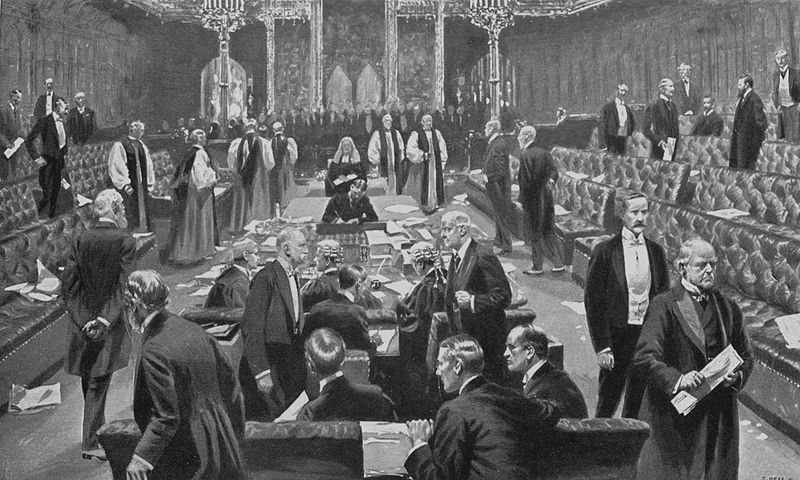
Severability; This is the first part of a three part series.
Each peace examines a concept in service to an argument I intend to fully
illuminate in the 3rd part of the series. This first part examines
the idea of severability as a metaphor that can be used to clarify missions,
jobs, tasks in the library.
The concept of severability becomes useful as a metaphor in librarianship when
we are faced with budget deficits and institutional cutbacks. Traditionally
librarians have faced such periods with a do more with less attitude. The
viability of such an approach is currently under threat due to the protracted
nature of underfunding. Some libraries
and library systems have been operating under severe budget constraints for
nearly a decade. Questioning what we can
sever out of provides the profession and these institutions an opportunity to
find and focus on core functions. When
asking the questions evaluating severability, it’s important to remember, that
we are not asking, what can we do without, but what can’t we do without?
Practically, severability is reliant on the ability of a separate parts of the statute to have separate mechanisms for enforcement. What this means is that when evaluating severability, after a core mission has been determined, by determining what our absolute core function is, we conceptualize our organization. This time by by asking what facilitates that core mission. In essence, stripping our institutions to the core function allows for us to focus on developing those institutions in an agile framework, where we focus on delivering core services, and then build on those in a series of iterations, while engaging stakeholders. This allows the library to fluidly rebuild itself into its new identity and clarified role.
Practically, severability is reliant on the ability of a separate parts of the statute to have separate mechanisms for enforcement. What this means is that when evaluating severability, after a core mission has been determined, by determining what our absolute core function is, we conceptualize our organization. This time by by asking what facilitates that core mission. In essence, stripping our institutions to the core function allows for us to focus on developing those institutions in an agile framework, where we focus on delivering core services, and then build on those in a series of iterations, while engaging stakeholders. This allows the library to fluidly rebuild itself into its new identity and clarified role.
Different libraries will obviously come up with different answers to this question, a university library, might look a bit more like a traditional book warehouse, while a public library might look a bit more like a community center. Wiping the board clean and engaging in radical redesigns of libraries missions isn’t just work for radicals; it’s an essential thought exercise for leaders. It is essential not just for moving our institutions into the future, but also for stewarding our past and steering our present.
Tuesday, November 13, 2012
Tech Talks
Tech Talks are a new type of library program aimed at providing patrons connection to new emerging technological tools. It's goal is to do roughly what book talks do, but for technology; provide people a place to find new technologies, talk about how technologies impact their lives, and discover new uses for technology at their library. Each Tech talk should be organized around a theme, and have a between 4-7 minutes spotlight on 3-5 technologies, apps, or tools rather than focused on a particular technology or product.
While technology programming at libraries generally features longer sessions organized around a class or workshop model, Tech Talks are a poppier way to connect patrons with emerging tools and trends. Just like a book talk on non-fiction subjects, Tech talks can integrate elements of a class, or demo, but should included a broader focus on multiple tools. For example a Tech Talk on word processing programs might include a demo of certain MS Word features, but would also discuss other programs.
While technology programming at libraries generally features longer sessions organized around a class or workshop model, Tech Talks are a poppier way to connect patrons with emerging tools and trends. Just like a book talk on non-fiction subjects, Tech talks can integrate elements of a class, or demo, but should included a broader focus on multiple tools. For example a Tech Talk on word processing programs might include a demo of certain MS Word features, but would also discuss other programs.
The goal of Tech Talks is to decrease alienation with technology and encourage trans-literacy. Trans-literacy, is the ability to communicate across a variety of platforms. Tech Talks should be focused on productive technologies rather than on technologies that drive consumerism. Technologies that allow for the storage of data, the creation of artistic works, creation of data sets, and representation of information (ie websites/blogs) should be showcased. Patrons should also be given a basic understanding of how the technology works, and any underlying issues.
Tuesday, July 3, 2012
Notes from the frontline - Blaft
It's been a little bit since I wrote about my long standing project creating an annotated bibliography of science fiction translated into English, the project is well over the half way point. It should be done before the end of the month. Currently, I'm working on wrapping things up with my two largest sections, Japaneses and French science fiction. When these are done, I'll just have a few holes to fill, notably Russian, and German, both of which have substantial work, just not a lot of it.
 Lately, I have been browsing a very high quality collection of short stories translated from Tamil into English, The Blaft Anthology of Tamil Pulp Fiction. Jess Nevins, a librarian and knowledge producer, who I find worthy of esteem thinks highly of it. After getting a chance to peruse them myself, I have to say I agree with his assessment. If you're into pulp fiction, or science fiction, I would definitely by a copy, or two, or three. The book features extremely high quality annotations and illustration, and the first volume deals with modern authors rather then with pulp from the past, while the second volume also seems to have longer excerpts then the first one did and have a bit broader of a focus.
Blaft is an Indian publisher with an alternative bend who focuses mainly on translating stuff into English. They have a wonderful website, and I hope that they keep up the good work.
Keep it locked here for more updates, I'm a book away from finishing with the Japanese section the bib. I'll be posting something like that shortly.

Blaft is an Indian publisher with an alternative bend who focuses mainly on translating stuff into English. They have a wonderful website, and I hope that they keep up the good work.
Keep it locked here for more updates, I'm a book away from finishing with the Japanese section the bib. I'll be posting something like that shortly.
Sunday, July 1, 2012
You stay classy South Carolina

South Carolina's legislative bodies have, in their wisdom, passed a bill which severely limits (pretty much eliminates) the ability of municipalities to launch there own broadband networks. Ars Technica reports this effort was largely a result of lobbying from AT&T using an ALEC drafted proposal.
For those of you who haven't been paying attention ALEC is a "bi-partisan" group largely dominated by conservative interests. They gained prominence in the news cycle when it came to light that they were supporting some very unsavory legislation. Eventually ALEC came close to disbanding as major corperate sponsors pulled their backing. I think we can take this as evidence, that like the John Birch Society, we'll be dealing with ALEC for a long time to come. Other states beware, now that this has passed in SC the other conservative controlled legislatures may be passing similar bills.
A large portion of South Carolina is called the 'Corridor of Shame'. It's a largely rural stretch of the state where underfunded and supported schools and services have produced a startling amount of illiteracy in some counties, including adult illiteracy rates are as high as 29%.. A digital divide is another systemic problem that faces South Carolina. This digital divide is not just another barrier to solving for adult literacy and providing education, but also to the very development of the state itself.
Admittedly providing digital services to these rural areas will be expensive for private industry, especially considering that many people in these areas won't be able to subscribe to these services. In many ways, broadband to rural areas faces the same problems infrastructure challenges providing electricity and sewer access posed to these same communities less then fifty years ago. Even into the 1960s areas in counties within the corridors of shame were lacked access to basic utilities like electricity and especially telephone service. Federal legislation was created to solve the problems posed by a lack of infrastructure (in 1936, and expanding the legislative mandate to telephone service in 1949).
This legislation had effects beyond just improving peoples lives. From 1933 to 1967 income rose in the area covered by the Tennessee Valley Authority, from 49 to 69 percent of the national average. Broadband internet can have the same impact. According to a report from PPIC a public policy think tank, there is a positive correlation between broadband access and economic growth. By providing broadband services, you generate commerce and taxes, and provide the state with a workforce that can attract businesses. All things South Carolina desperately needs.
The same report notes that $7.2 billion was designate by the federal government for the expansion of broad band to undeserved areas. Areas which are defined as areas having access then of less then 200kbs. The South Carolina bill prohibits public networks of more then 190kbs. You can see the problem.
The effect of the South Carolina Law is that when underserved by the private sector theirs no recourse for someone in an undeserved area has not alternitive. As Ares reports the law contains more grandfather clause, so communities using federal grant money to serve citizens now have to divest themselves of the network. Jim Baller, one of the nation's leading experts on public broadband points to a broad effort to delay and destroy public broadband efforts.
While at a county level South Carolina does OK, when you break it down at a census track level 60% of South Carolinians live in areas where less than 60% or households have broad band access. With a 3 out of 5 house holds state wide having broadband access above 200kbs, and less than 1 out of five meeting the national target speed of 3mbs according to tracking released late last year by the FCC. South Carolina has a lot of work to do especially in rural communities. Which is why this law doesn't make since from a policy point of view.
In 2007 the state auctioned off a huge portion of it's wireless spectrum, in South Carolina, the state, not institutions held educational broadcast licenses and the associated band width. Two companies bought the rights to 90% the states educational band. Two years later the local alternative weekly launched an investigative report and found that little had been done to develop those licenses, while the two companies used their monopoly to freeze out local competition. There's a large technical challenge to establish the infrastructure to provide broadband access to residents of a state. Having sold the easiest way to connect the state to the web, law makers have now put another nail in the coffin of this states economic development. This law represents another barrier to citizens getting the services they need, and cuts off what was ending the legacy of the "corridor of shame."
Admittedly I am a bit of a big government guy. But I prefer to have market mechanisms provide services, including utilities. The problem with this bill isn't that it privatizes a public good, its that it prevents governments, municipal, local small governments, from being able to address the failures of the market, which are dire in rural South Carolina. The state legislature again shows its allegiance is more towards those in power then to fixing the considerable problems facing the state. I think they would be wise to remember something my mother told me: You don't have to be part of the solution, but don't be part of the problem.
Subscribe to:
Posts (Atom)